By Veridermis · Published September 19, 2026
Gel and cream moisturizers differ in texture, but the whole formula determines how each one feels and works in your routine. A lighter finish may suit one person, while another prefers the cushion of a cream. Neither label alone guarantees tolerance or results.
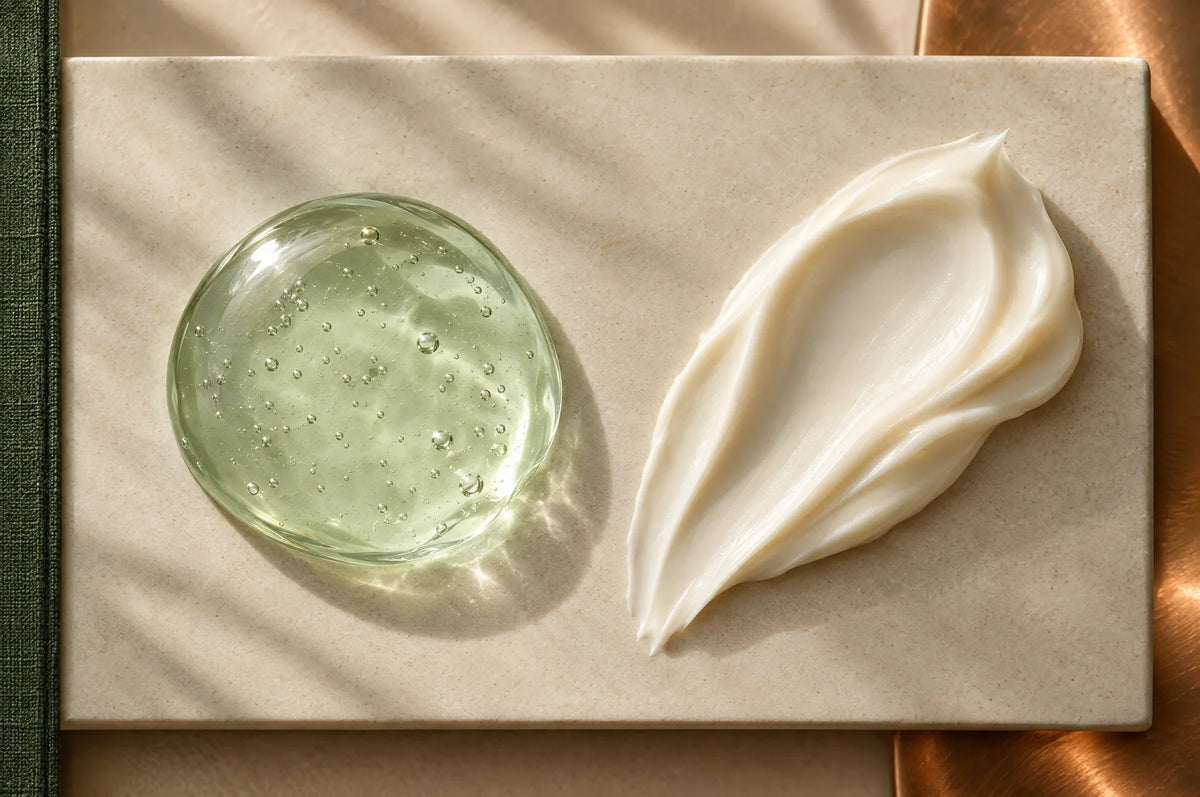
Cover: AI-generated editorial imagery; not a customer testimonial, clinical result or photograph of a specific formula.
What the texture names tell you
The AAD’s moisturizer guide describes gels as lighter and creams as thicker, with more oil than gels or lotions. It recommends choosing with your skin type and degree of dryness in mind. Treat that as a starting framework, since individual formulations vary.
Gel: consider it when you prefer a light, easily spread texture. Check whether the product is actually labeled as a moisturizer; a gel-textured serum is not automatically interchangeable.
Cream: consider it when you enjoy a richer finish. Compare the labeled amount and how it fits with the other products you wear. A thicker texture does not mean you should use more.
Gel-cream: this name suggests a texture between the two, but it is not a standardized promise about ingredients. Two brands using the same description can feel quite different.
A practical comparison before you buy
Start with your current moisturizer rather than an abstract skin-type quiz. Write down what you like and what you would change: a finish that feels too heavy, a texture that catches under makeup, or a preference for a jar versus a pump. That gives you a specific question to answer while shopping.
- Read the product’s intended use and complete ingredients.
- Check the directions and any oil-free, fragrance-free or noncomedogenic claims you need.
- Compare the texture with your current product, ideally using an available sample.
- Introduce one change at a time and observe comfort.
Someone shopping for a morning moisturizer under makeup may prioritize a different feel from someone selecting an evening cream. You can also keep the same moisturizer for both. There is no requirement to buy a separate texture for each time of day.
Choose by comfort and the rest of your routine
Use the texture name as a starting point, then check the complete formula and directions. This table organizes preferences and questions; it cannot predict whether a product will cause a reaction.
| Your preference or observation | What to check | Next guide |
|---|---|---|
| A lighter finish | Compare a gel or lotion with your current moisturizer, checking that it is a moisturizer rather than a serum. Texture alone is not a tolerance or pore-clogging rating. | Moisturizer choices for oily skin |
| A sticky or heavy finish | Review the product's amount instructions and the optional layers you apply. Change one variable at a time rather than assuming every cream will feel the same. | Amount and application |
| Dryness despite a richer texture | Note when the dry feeling returns and any recent washing or routine changes. A thicker texture does not answer every cause of discomfort. | Dryness after moisturizing |
| Concern about clogged pores | Read the actual label and complete ingredients. Do not infer an oil-free or non-comedogenic claim from the word gel, or from how quickly a product spreads. | AAD guidance on moisturizer labels |
Where the Veridermis cream fits
Veridermis Centella Face Cream belongs on the cream side of this comparison. Its current ingredient list includes glycerin, shea butter, caprylic/capric triglyceride, niacinamide, Centella extract and madecassoside. These are details to assess as part of the full formula, not a guarantee that it suits every person.
The labeled method is to warm a pea-sized amount between the fingers and press gently onto the face and neck after serum, if you use one. The ingredients page lets you compare all five Veridermis formulas before committing to a routine.
By contrast, Centella Face Serum has a different place in the sequence. Choosing between gel and cream moisturizers is not the same decision as choosing between serum and moisturizer. Our comparison of those steps explains why.
When to reconsider the choice
If a formula feels too rich, check that you are following its quantity instructions and not stacking several optional products beneath it. If the finish still does not suit you, a different texture may be more practical than trying to make yourself enjoy it.
When a layer rolls up, investigate the combination and application rather than automatically blaming all creams or all gels. Read why skincare pills for a structured way to compare combinations.
A formula that feels light is not necessarily gentler, and a richer one is not a treatment for every dry patch. Avoid continuing a product that causes a reaction and seek advice about persistent symptoms. For changing winter comfort, see our winter skincare routine.
If a formula stings when you apply it, use our checklist for moisturizer that burns or stings to review recent changes and know when to seek advice.
If breakouts appeared after a product change, our guide to moisturizer and acne includes a product-change diary and explains what the timing can—and cannot—tell you.
Frequently asked questions
Is gel moisturizer always better for oily skin?
A lighter texture may be more comfortable for some people, but the full formula and personal response matter. Gel is not a guarantee of suitability.
Is a gel serum the same as gel moisturizer?
No. Texture alone does not establish a product’s role. Read its intended use and directions.
Is Veridermis Face Cream a gel-cream?
It is presented as a face cream. Its formula includes shea butter and other emollient ingredients; compare that texture with your preferences.
Do I need both a gel and a cream moisturizer?
No. One moisturizer that fits your routine can be enough. Buying both is a preference, not a required skincare step.
Does a sticky finish mean a moisturizer clogs pores?
A sticky finish alone cannot tell you whether a moisturizer will clog pores. Check the amount instructions, other layers and the actual product label. If breakouts follow a change, record the timing rather than treating texture as proof of the cause.